
From the bustling streets of ancient Mesopotamia to the vibrant markets of the Indus Valley, cultural hearths have shaped the world as we know it. These epicenters of innovation and creativity are where ideas, art, and traditions first ignited like a spark in a dark room. Imagine a melting pot where the ingredients of culture blend together to create a savory stew of human experience.
Understanding Cultural Hearths
Cultural hearths serve as crucial origins for human civilization, influencing various aspects of society. Ancient Mesopotamia, often recognized as one of the earliest cultural hearths, introduced innovations in agriculture and urban planning. The Indus Valley also played a significant role, contributing advancements in writing, trade, and city design.
Characteristics define cultural hearths. These areas commonly showcase a dense population, fertile land, and abundant resources. Cultural diffusion frequently occurs, where ideas and technologies spread from these centers to surrounding regions. Consequently, cultural hearths often act as springboards for expansion and development.
Regions like Mesoamerica, with the Maya and Aztec civilizations, reveal how cultural hearths functioned as nurturing environments for art and religion. Similarly, ancient Egypt demonstrated advancements in governance and architecture that influenced nearby cultures.
Significant examples of cultural hearths include:
- Mesopotamia: Established writing systems and irrigation practices
- Indus Valley: Developed urban centers with sophisticated sanitation
- Mesoamerica: Created intricate systems of agriculture and astronomy
- Ancient Egypt: Promoted monumental architecture, such as pyramids
Cultural hearths not only shaped their local environments but also left lasting impacts on global cultures. Their legacy continues, as the ideas and practices originating in these centers echo through time, influencing contemporary societies. Understanding cultural hearths highlights the interconnectedness of human experience and the shared heritage across civilizations.
Characteristics of Cultural Hearths
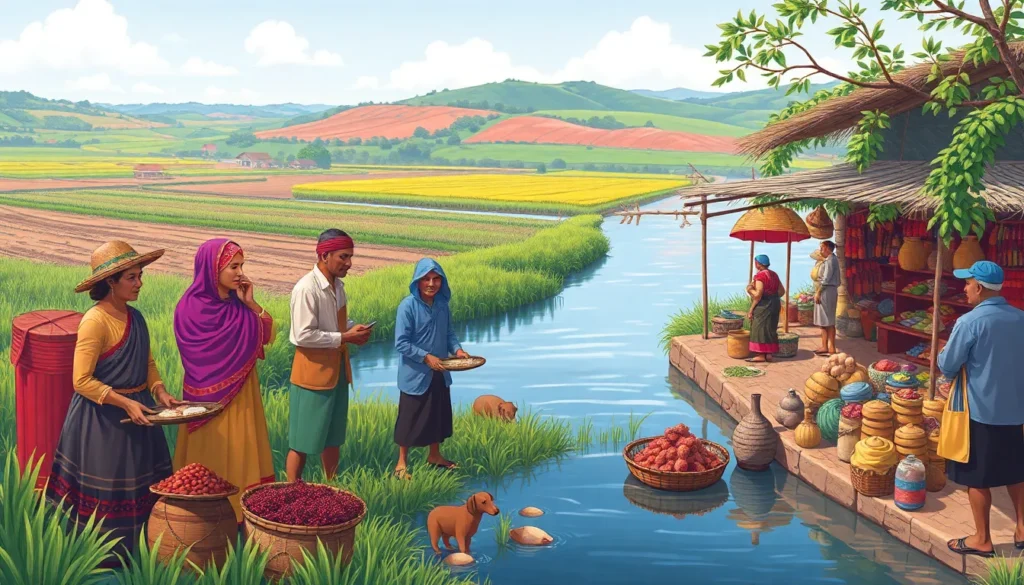
Cultural hearths display distinct characteristics that define their roles in human civilization.
Geographical Location
Cultural hearths are often found in regions with fertile land and favorable climates. They typically arise near rivers or coastlines, facilitating agriculture and trade. Examples include the Nile Valley and the Tigris-Euphrates region. Dense populations commonly form in these areas, as resources support larger communities. These geographic features promote cultural exchange, enabling ideas to spread organically. Major urban centers frequently develop, serving as focal points for innovation and interaction.
Social Structures
Social structures within cultural hearths exhibit complexity and diversity. Hierarchical systems often emerge, where leadership roles guide communities. Class distinctions can arise based on wealth, profession, or education. Additionally, cultural practices, such as religion and governance, shape societal organization. Family units play a crucial role in maintaining traditions and social norms. Communities tend to promote shared values, fostering cohesion and identity among members. Collaborative efforts in arts and education often flourish, enriching the cultural landscape.
Economic Activities
Economic activities in cultural hearths are diverse and sophisticated. Agriculture commonly forms the backbone, with innovations in farming techniques enhancing productivity. Trade routes often establish, connecting these hearths to neighboring regions and facilitating resource exchange. Craftsmanship and industry also emerge, leading to the creation of goods for local and export markets. Specialization in various trades promotes economic interdependence within and between cultures. By cultivating diverse economies, these areas sustain growth and adaptability over time.
Major Cultural Hearths in History
Cultural hearths represent critical junctures in human history where innovation and civilization flourished. Four significant examples include Mesopotamia, the Indus Valley, ancient China, and Mesoamerica.
Mesopotamia
Mesopotamia marks one of the earliest cultural hearths. This region, located between the Tigris and Euphrates rivers, was pivotal for agricultural advancements. Innovations such as irrigation systems transformed arid land into fertile fields. Personalities like Hammurabi introduced early legal codes, influencing governance. Writing emerged here, facilitating the recording of trade and culture. Dense urban centers like Ur and Babylon showcased architectural prowess through iconic ziggurats. Rich traditions in art and literature also took root, impacting civilizations for centuries.
The Indus Valley
The Indus Valley ranks as another major cultural hearth. Situated in present-day Pakistan and northwest India, it featured well-planned cities like Harappa and Mohenjo-Daro. These urban centers displayed advanced drainage and sanitation systems. Society in the Indus Valley engaged in agriculture and trade, cultivating wheat and barley. Craftsmanship flourished, evidenced by intricate jewelry and pottery. A unique script emerged, though it remains undeciphered, indicating literacy. The area’s geography ensured abundant resources, facilitating cultural exchange and innovation.
Ancient China
Ancient China stands as a vital cultural hearth renowned for its philosophical, technological, and artistic contributions. This region along the Yellow River experienced significant agricultural advancements, particularly rice cultivation. Innovations like papermaking and the compass revolutionized communication and navigation. Confucianism and Daoism provided philosophical frameworks shaping social structures. The Great Wall exemplifies monumental architecture while reflecting strategic defense priorities. China’s interactions with neighboring regions promoted cultural diffusion through trade along the Silk Road.
Mesoamerica
Mesoamerica represents a notable cultural hearth filled with rich civilizations like the Maya and Aztec. These societies developed complex calendars and astronomical systems to track celestial events. Agriculture thrived through techniques such as terracing and chinampas. Significant urban centers like Tenochtitlán displayed impressive architectural achievements, including temples and pyramids. Art and craftsmanship flourished, with detailed sculptures and vibrant textiles. Trade routes connected Mesoamerican cities, fostering economic interdependence and cultural exchange across the region.
The Impact of Cultural Hearths on Modern Society
Cultural hearths significantly shape modern society through their historical legacies. Innovations in agriculture from Mesopotamia continue to influence contemporary farming practices. Urban planning techniques established in the Indus Valley remain evident in today’s city designs.
Ancient writing systems, such as cuneiform and hieroglyphics, laid the groundwork for literacy and communication worldwide. These developments fostered trade networks that persist, enabling the exchange of goods and ideas globally. Current agricultural techniques stem from the intricate methods created in Mesoamerica, promoting sustainable practices and crop diversity.
Leadership structures established in early civilizations inform current governance models. Complex hierarchies, once prevalent in cultural hearths, echo in today’s political systems. Social roles defined by wealth and profession in historical societies resonate in modern economic frameworks.
Geographical advantages of these hearths favored cultural diffusion. Fertile lands near rivers enabled civilizations to flourish and encouraged interactions among diverse groups. This interconnectedness laid the foundation for globalization, influencing cultural identities around the globe.
Architectural marvels, such as the pyramids of ancient Egypt, inspire modern engineering and design. Artists and architects draw from these historical influences, leading to iconic structures worldwide. Mathematical advancements from ancient China, particularly in geometry and astronomy, continue to inform contemporary scientific inquiry.
Cultural hearths serve as the roots of diverse practices in art, cuisine, and religion. Traditions from these centers integrated into various cultures enhance the global tapestry of human experience. Awareness of these historical influences promotes appreciation for cultural diversity and shared heritage.
Cultural hearths have played an essential role in shaping the trajectory of human civilization. Their influence is evident in modern agriculture urban planning and governance, reflecting a legacy that continues to resonate today. By understanding these foundational areas, one gains insight into the interconnectedness of cultures and the shared heritage that defines humanity.
The innovations and ideas that originated in these vibrant centers have transcended time and geography, enriching societies around the world. As contemporary cultures continue to evolve, the impact of these ancient hearths remains a vital part of the ongoing narrative of human progress and cultural exchange. Embracing this history fosters a greater appreciation for the diversity that characterizes the global community.